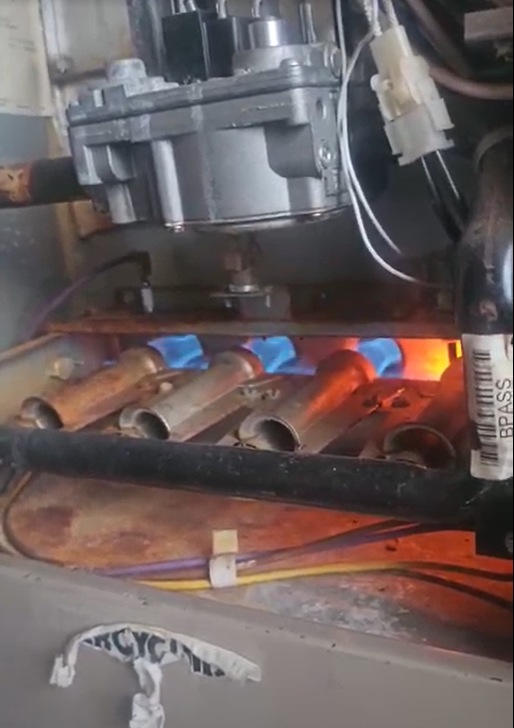
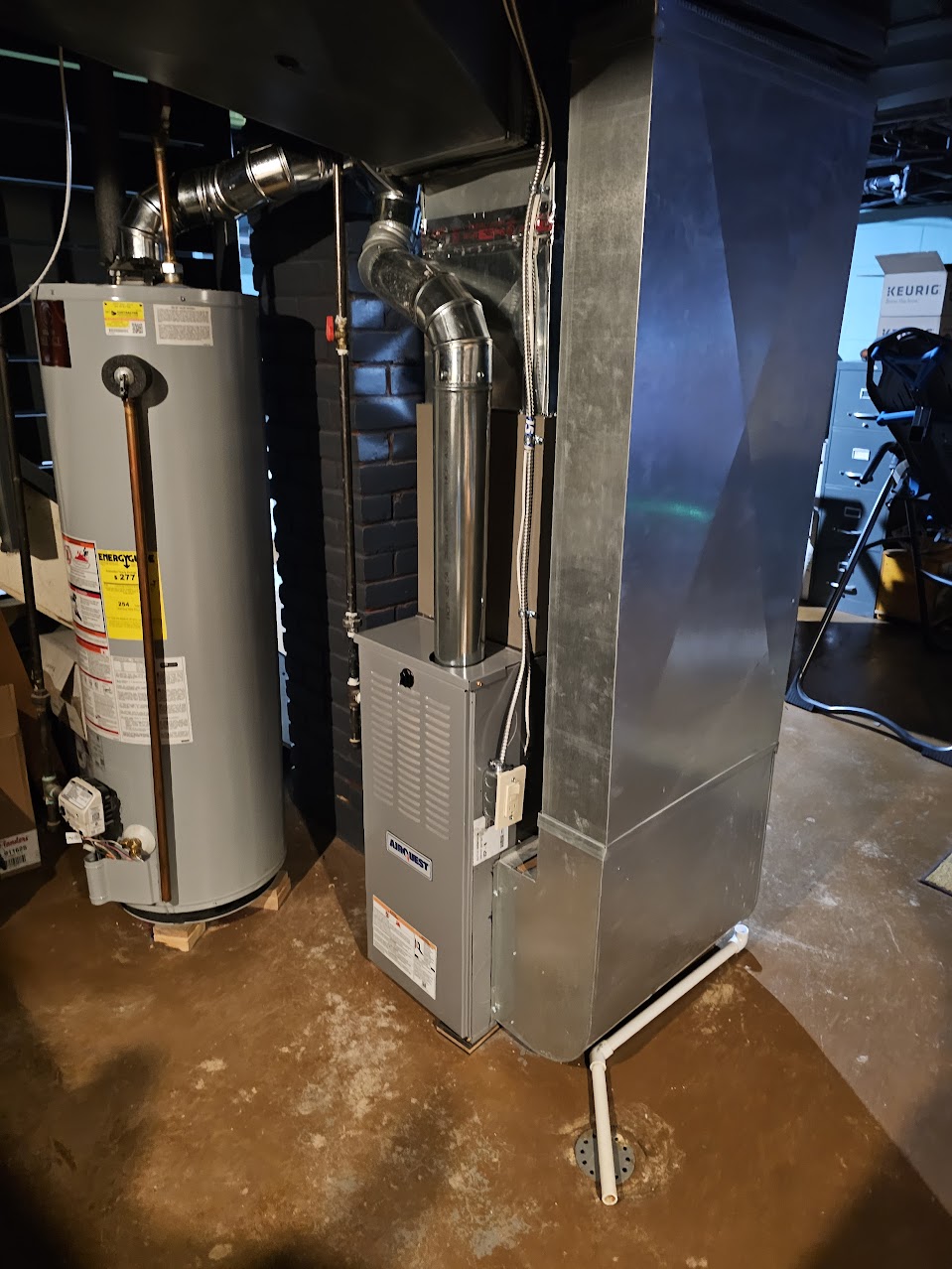
It sounds like it shouldn’t be possible. It’s August, it’s hot, and somehow your air conditioner has ice on it. We’ve run multiple icing calls this summer — units in Southfield, Dearborn, Detroit, and elsewhere — and the pattern is the same every time. Ice is not the problem. It’s a sign that something else has already gone wrong.
Here’s how to think through it.
What’s Actually Happening
Your evaporator coil works by absorbing heat from the air passing over it. That process requires two things: enough airflow and enough refrigerant pressure. If either one drops, the coil gets too cold. Moisture in the air hits that surface and freezes. Once ice starts building up, it insulates the coil and makes airflow even worse. It compounds fast.
By the time you see ice or notice the system blowing warm air, the unit has usually been struggling for a while.
The Two Main Causes
Low refrigerant (low charge). Refrigerant doesn’t get consumed like fuel. If the charge is low, there’s a leak somewhere. The leak might be slow — a system can run undercharged for a season or more before it shows obvious symptoms. But low pressure drops the coil temperature below the frost point, and you get ice. One of our calls this summer was a unit that had been installed just two months prior and was already icing up. A new installation with a leak is not unheard of, and it’s covered under warranty — but only if you catch it.
Restricted airflow. The coil needs a steady volume of air moving across it. If that air is blocked, the coil can’t pick up enough heat and it freezes. Common culprits: a clogged filter, a blower motor running slow or failing, closed or blocked supply and return vents, or a dirty coil that hasn’t been cleaned in years.
We also had a call this summer where the customer had the thermostat set to 65 degrees and the left side of the coil was icing. That combination — aggressive setpoint, possible airflow issue — is a fast path to a frozen coil.
What You Can Check Yourself
Before you call anyone, do these things:
- Turn the system off. Switch it to fan-only mode or shut it down. Let the ice melt completely. Running the system with a frozen coil will overwork the compressor.
- Check the filter. Pull it out and look at it. If it’s gray and matted, that’s your first suspect. A dirty filter can restrict airflow enough on its own to cause icing.
- Check your vents. Walk the house or building. Make sure supply and return vents are open and not blocked by furniture or equipment.
- Look at the setpoint. Running the thermostat at 65 on a residential system in August is pushing the equipment. Most residential AC is designed to maintain around a 20-degree difference from outdoor temperature, not to hit 65 when it’s 90 outside.
If you change the filter, clear the vents, set a reasonable temperature, and the system re-ices — stop there. You need a technician.
What Requires a Tech
Anything involving refrigerant requires an EPA 608 certification. That means checking the charge, finding the leak, recovering refrigerant, and recharging the system. This is not a DIY job and it’s not something any unlicensed person should be touching.
Beyond refrigerant, diagnosing a slow blower motor, a failing capacitor, or a dirty evaporator coil that needs chemical cleaning — that’s also tech work. Evaporator coils are not easy to access on most equipment, and cleaning them wrong makes things worse.
We also see commercial situations where multiple zones or units are affected and the root cause isn’t obvious without checking pressures and airflow at each unit. A recent call involved several RTUs at a commercial property where the units weren’t starting correctly and some areas of the building weren’t getting cooling at all. That kind of problem takes systematic diagnosis, not guesswork.
One More Thing Worth Knowing
If your system iced up and you’ve already let it thaw and changed the filter, and it’s running fine now — don’t assume it resolved itself. If the charge is low, it will ice again. The underlying leak hasn’t gone anywhere. Catching a slow refrigerant leak before next summer is a lot cheaper than dealing with a compressor that’s been running undercharged for two seasons.
If you’re in Metro Detroit and your AC is icing up, not cooling, or acting inconsistent, we’re taking service calls now.