October in Michigan means one thing: someone’s going to turn on the heat for the first time since March, hear something wrong, and call us. That’s not a complaint. It’s just how the season goes.
Over the last 90 days we’ve completed 65 jobs across Metro Detroit — Detroit, Southfield, Novi, Dearborn, Canton, Farmington, Westland, Livonia. The split is roughly half service calls, a good chunk of preventive maintenance, and a handful of installs. As September wound down, the nature of those service calls started shifting. Less air conditioning, more “we haven’t turned the heat on yet but we need to before it gets cold.”
That shift is fully here now.
What Furnace Startup Season Actually Looks Like
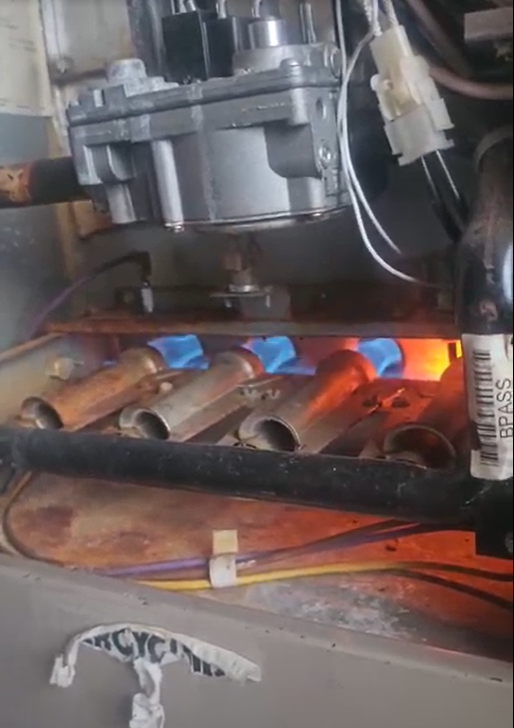
A heat startup isn’t complicated. Fire the system, verify ignition, check the heat exchanger, confirm the limit switches are functioning, look at the flue, check the filter. It takes less than an hour on most residential systems.
But what comes up during those checks matters. This fall we’ve already run furnace inspections including a city-required inspection — those happen more often on rental properties and commercial buildings than most people realize. We’ve also had a gas leak flagged near a furnace that DTE had already tagged. When DTE tags a gas leak, they shut off the gas and the meter doesn’t come back on until a licensed contractor clears it. That’s not a situation you want to find yourself in on the first cold night of the year.
If DTE has tagged your meter or you’ve had any concern about a gas smell near the furnace, that gets addressed before anything else. We handle the HVAC and appliance connection side. The gas line work from the meter itself falls outside what we do — that’s DTE’s territory — but once the supply is restored, we get the system running and confirmed safe.
The Filter Problem
One of the jobs this past stretch was a maintenance follow-up specifically about a filter. That’s not unusual. Filters are the thing everyone knows they should change and many don’t.
A clogged filter doesn’t just reduce airflow. It makes the heat exchanger run hotter than it’s designed to. Over time that warps and cracks it. A cracked heat exchanger puts combustion gases — including carbon monoxide — into your living space. That’s the failure mode that makes furnace maintenance worth doing, not just the “improve efficiency” pitch you hear everywhere.
Check your filter now. If it’s gray and thick, change it before you run the heat consistently. A one-inch filter in a standard residential system should be replaced every one to three months depending on the house. If you have a media filter — the thick four- or five-inch ones — those usually go annually.
Rooftop Units Are in the Same Boat
Commercial customers aren’t off the hook. We’ve had rooftop units showing up on service calls for startup issues — both RTUs not starting correctly is a real work order from this window, not a hypothetical. RTUs sit on a roof in Michigan for six months of summer heat, UV exposure, and whatever weather comes through. Contacts corrode. Economizers stick. Belts wear.
The condenser cleaning and filter/belt inventory work we’ve been doing for commercial accounts is exactly the right move before heating season. You don’t want to find out the heat strips on a rooftop unit are shot during the first cold snap in October when everyone’s calling at once.
Icing: The Last Air Conditioning Problem of the Season
We’re still getting AC icing calls. One system installed two months ago is icing up — left side. Another customer has “it’s icing up again” as the problem description, and their thermostat is showing 65 degrees inside.
An air conditioner that’s icing over in October in Michigan is almost always one of two things: low refrigerant or a severely restricted airflow situation (dirty filter, blocked return). Running a system in weather this cool — overnight temps dropping into the 40s now — also pushes systems toward icing that wouldn’t ice in July. If the system is icing up, shut it off and let it thaw before running it again. Running it frozen can damage the compressor.
At some point soon these calls are going to stop because nobody’s running cooling anymore. But we’re not quite there yet.
What to Do Right Now
If you haven’t scheduled a furnace inspection, do it before mid-October. Not because of some arbitrary deadline, but because once a cold stretch hits and the phones get busy, you’re waiting. A system that didn’t run all summer can have any number of small issues that only show up under load.
Check your filter. Test your thermostat in heat mode before you actually need it. Make sure your CO detectors have working batteries — Michigan residential code requires them, and this is the time of year they earn their place.
We’re licensed in Michigan (#7117025) and based in Southfield. Most of our work is across Wayne, Oakland, and Washtenaw counties. If your furnace hasn’t been looked at, this is the window to do it.